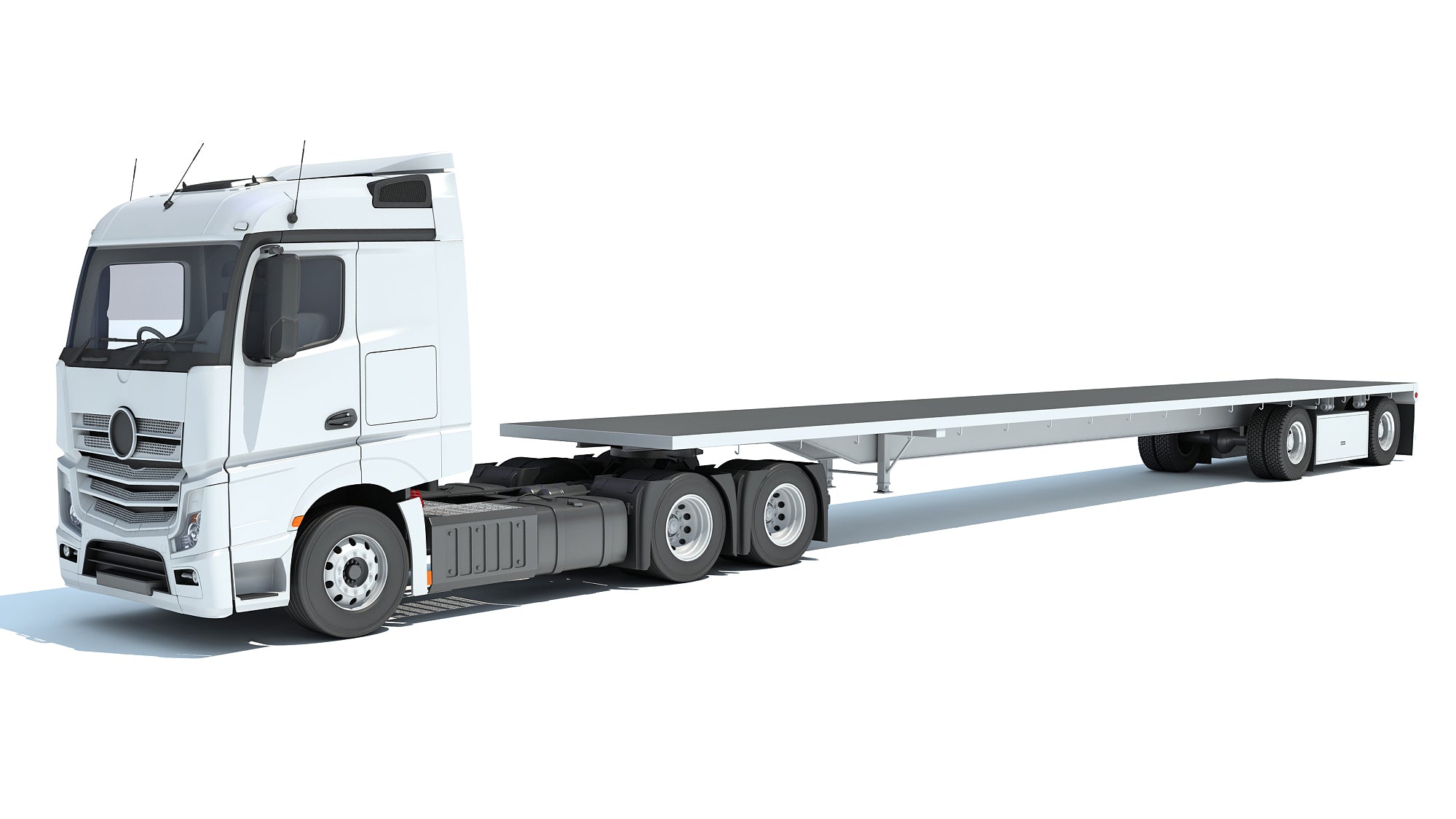
Oversized, heavy, or irregularly shaped freight demands the right open-deck equipment — and MyExpressFreight sources it across all 50 states and internationally. Standard flatbed, step deck, double drop, RGN, and conestoga trailers are all available, with full permit coordination and pilot car services managed in-house on every domestic and cross-border lane.
When Standard Trailers Won't Do
Flatbed is the equipment of choice when freight is too large, too tall, too wide, or too heavy for an enclosed trailer — or when it must be loaded from the side or top rather than through dock doors. From a single piece of industrial machinery to a full project cargo move across multiple loads, MyExpressFreight's open-deck network delivers the specialized capacity your freight demands.
We work with a vetted network of flatbed, step deck, lowboy, RGN, and conestoga carriers operating across every North American lane. Our team handles permit applications, route surveys, and pilot car coordination so you can focus on your freight — not the logistics of moving it.
• Standard flatbed, step deck, double drop, RGN, and conestoga
• Oversize and overweight permit coordination in all 50 states
• Pilot car and escort flag vehicle arrangement
• Tarping, strapping, chaining, and blocking services
• Stretch flatbed and multi-axle trailers for extreme loads
• Same-day quotes on standard loads; 24–48 hr on permit moves
• Real-time GPS tracking from pickup through delivery
Choosing the right open-deck trailer depends on your freight dimensions, weight, and loading method. Here is a quick reference for the most common flatbed equipment types.
Standard Flatbed:
48–53 ft long, 8.5 ft wide, max height 8.5 ft, max freight ~48,000 lbs
Step Deck (Drop Deck):
Upper deck ~11 ft, lower deck ~37–40 ft; allows freight up to 10 ft tall
Double Drop (Lowboy):
Well deck drops to ~18–24 inches off the ground; handles freight up to 12 ft tall
Removable Gooseneck (RGN):
Detachable front allows drive-on loading for equipment; max height ~11.5–12 ft with permit
Conestoga:
Rolling tarp system on a flatbed frame — full enclosure without tarping labor; ideal for weather-sensitive freight
Stretch Flatbed:
Extendable deck up to 80 ft for long freight like wind turbine blades, bridge sections, or structural steel
Multi-Axle / Heavy Haul:
3–13 axle configurations for loads exceeding standard weight limits with state permits
Flatbed Service Options
Spot Flatbed — One-time loads at market rates on any lane.
Contract Flatbed — Negotiated rates and committed capacity on regular lanes.
Oversize & Permit Loads — Full permit coordination in all 50 states.
Pilot Car Coordination — Escort vehicle arrangement for oversize moves.
Tarping & Securement — DOT-compliant tie-down and tarping on every load.
Project Cargo — Multi-load coordination for large capital projects.
Why MyExpressFreight
Open-Deck Specialist Network — Flatbed-specific carriers on major US corridors.
Permit Expertise — All 50 states, including multi-state and conflicting regulations.
Cargo Securement Compliance — Every load secured per 49 CFR Part 393.
Real-Time Tracking — GPS visibility from pickup through delivery.
Same-Day Quotes — Standard loads same-day; permit moves within 24–48 hrs.
Claims Support — Full claims management from filing through settlement.
Flatbed Shipping FAQs
What is flatbed shipping?
Flatbed shipping is the transportation of freight on an open-deck trailer with no walls or roof. It allows cargo to be loaded from the side or top using cranes, forklifts, or by driving equipment directly onto the trailer — making it the right choice for oversized, heavy, or irregularly shaped freight that cannot be loaded through a standard trailer door. Common flatbed freight includes steel, lumber, construction and agricultural equipment, machinery, and precast concrete.
What is a step deck trailer and when should I use one?
A step deck (also called drop deck) has a raised front section and a lower main deck, creating a height clearance of up to 10 feet on the lower portion. Use a step deck when your freight is taller than 8.5 feet but under 10 feet — the height threshold at which a standard flatbed would require an oversize permit. Step decks are commonly used for large machinery, agricultural equipment, and tall manufactured goods that fit within 10 feet of height.
What is the difference between a flatbed and a step deck?
A standard flatbed has one continuous deck at a uniform height, with a maximum freight height of approximately 8.5 feet before oversize permits are required. A step deck has an upper and lower deck level, allowing freight up to 10 feet tall on the lower deck without oversize permits in most states. If your freight is between 8.5 and 10 feet tall, a step deck is typically the most cost-effective solution. Taller freight requires a double drop (lowboy) or RGN trailer with permits.
When should I use flatbed instead of dry van?
Use flatbed when your freight exceeds standard dry van dimensions, must be loaded from the side or top, or is too heavy for a standard enclosed trailer. If your freight fits comfortably through dock doors, stays within 8.5 feet of height, does not exceed 44,000–45,000 lbs, and doesn't need side or top loading — dry van is almost always the cheaper option. Only move to flatbed when the freight's physical characteristics make dry van impossible or impractical.
What Our Flatbed Clients Say
★★★★★
"We move structural steel weekly across the Midwest. MyExpressFreight consistently finds flatbed capacity when others can't, and the tie-down compliance on every load gives us confidence the freight will arrive intact."
DS
Dan S.Traffic Manager, Steel Fabricator
★★★★★
"The permit coordination MyExpressFreight handled for our oversize machinery moves saved us hours of dealing with state DOT offices. They had permits in hand before I even had to ask."
LK
Laura K.Logistics Director, Industrial Equipment
★★★★★
"We ship combines and planters every spring. Finding flatbed capacity during ag equipment season is brutal — MyExpressFreight's carrier network came through every time, even during peak planting season."
BW
Brian W.Fleet Coordinator, Agricultural Equipment
★★★★★
"Our wind turbine blade moves require stretch trailers, pilot cars, and night permits in multiple states. MyExpressFreight managed the entire operation without a single delay or permit violation."
CJ
Carlos J.Project Logistics Manager, Renewable Energy
★★★★★
"Switched our lumber outbound lanes to MyExpressFreight last year. Better rates, better carrier quality, and an actual human who answers when I call. Night and day versus our previous broker."
PH
Phil H.Operations Manager, Lumber Distribution
★★★★★
"Moving precast concrete panels to a construction site with a tight delivery window is not forgiving. MyExpressFreight hit every appointment, coordinated the crane unloading, and kept the job on schedule."
Does MyExpressFreight offer flatbed freight nationwide and worldwide?
Yes. MyExpressFreight is a trusted flatbed freight broker serving shippers across all 50 US states and worldwide, with competitive rates, vetted carriers, and a dedicated logistics expert on every shipment.
Is MyExpressFreight a nationwide and worldwide freight broker?
MyExpressFreight is a nationwide and worldwide freight broker and full-service 3PL, FMCSA licensed and bonded since 2009, serving shippers across all 50 US states and more than 150 countries.
What types of freight does MyExpressFreight ship?
MyExpressFreight ships LTL, full truckload, ocean, air, intermodal, drayage, refrigerated, flatbed, hazmat, expedited, trade show, warehousing, and other specialty freight through a network of 4,000+ vetted carriers with a 98% on-time delivery rate.
Who does MyExpressFreight serve?
MyExpressFreight serves small businesses, startups, e-commerce sellers, manufacturers, and distributors, acting as an outsourced logistics team that handles quoting, booking, importing, tracking, and claims.
How do I get a freight quote from MyExpressFreight?
You can get an instant freight quote by calling (424) 354-3241, emailing dispatch@myexpressfreight.com, or requesting a quote online at myexpressfreight.com.
Flatbed Freight Quote
Spot and contract rates on all North American open-deck lanes.
how to ship oversized freight on a flatbed truck, flatbed freight rates per mile, flatbed truck for heavy equipment shipping, oversized load shipping permits and escorts, shipping steel beams lumber or pipe by flatbed, machinery and equipment freight shipping, wide load freight shipping requirements, step deck vs flatbed trailer which do I need, flatbed shipping from California, heavy haul freight quotes online, open deck freight for construction materials, flatbed freight broker near me, how much does flatbed shipping cost, flatbed trucking for industrial freight, oversized freight shipping California to Texas, flatbed carrier for building materials, lowboy trailer for heavy machinery, flatbed freight with no tarping required, RGN trailer for oversized equipment, flatbed freight broker California, flatbed trucking broker, heavy haul freight service, step deck trailer freight, lowboy trailer shipping, RGN trailer freight, wide load shipping, open deck freight broker, flatbed carrier quotes, machinery freight shipping, equipment hauling service, building materials freight, steel freight shipping, lumber freight trucking, construction freight broker, pipe freight shipping, coil freight trucking, over dimensional freight, flatbed permits and escort, flatbed freight California, flatbed spot rates, flatbed contract rates, specialized flatbed freight, flatbed broker Los Angeles, freight broker Southern California, freight broker Orange County, freight broker San Diego, freight broker Phoenix Arizona, freight broker Denver Colorado, freight broker Dallas Fort Worth, freight broker Houston Texas, freight shipping Los Angeles to Dallas, freight shipping California to Florida, freight shipping West Coast to East Coast, licensed and bonded freight broker, FMCSA certified freight broker, top rated freight broker USA, freight broker with good reviews, reliable freight broker since 2009, nationwide flatbed freight broker, worldwide flatbed freight shipping, flatbed freight to all 50 states, international flatbed shipping, ship flatbed freight anywhere in the usa, who can ship my flatbed freight, find a flatbed freight broker near me, best flatbed freight broker in the usa, coast to coast flatbed freight, nationwide and worldwide freight broker, freight broker that ships to all 50 states and worldwide, freight broker for amazon sellers, ship pallets to amazon fba fulfillment centers, ecommerce freight broker and 3pl, ship freight overseas, international freight forwarder and 3pl, get an instant freight quote online, who can ship my freight across the country, i need a freight broker for my business, find a licensed and bonded freight broker, best freight broker in the usa for small business shipping, coast to coast freight shipping, flatbed freight rates, flatbed shipping quote, flatbed freight services, flatbed freight company, how much does flatbed freight cost, best flatbed shipping company, affordable flatbed freight shipping, flatbed logistics services nationwide, flatbed freight rates worldwide, what is the best way to ship freight across the country, how much does it cost to ship freight nationwide, do i need a freight broker to ship my freight, help me find a freight broker for my company, compare freight brokers and freight rates, freight broker with real time tracking and visibility, ship freight from the usa to anywhere in the world, who offers same day freight quotes online, recommend a reliable freight broker for my business, freight broker for manufacturers distributors and retailers, freight shipping company, third party logistics provider 3pl, freight forwarder usa, logistics and supply chain company, freight rate quote online, freight transportation services, domestic and international freight services, full service freight brokerage, managed transportation services, freight and logistics company nationwide